
This is the story of one of my most unforgettable winter wildlife photography encounters near Knivsta, Sweden, where I had the privilege of photographing a magnificent Great Grey Owl (Strix nebulosa) in its natural habitat.
There are days when wildlife photography tests your patience. Then there are days when nature rewards every frozen finger, every muddy boot, and every hour spent waiting in silence. A few days ago, I experienced one of those rewarding moments.
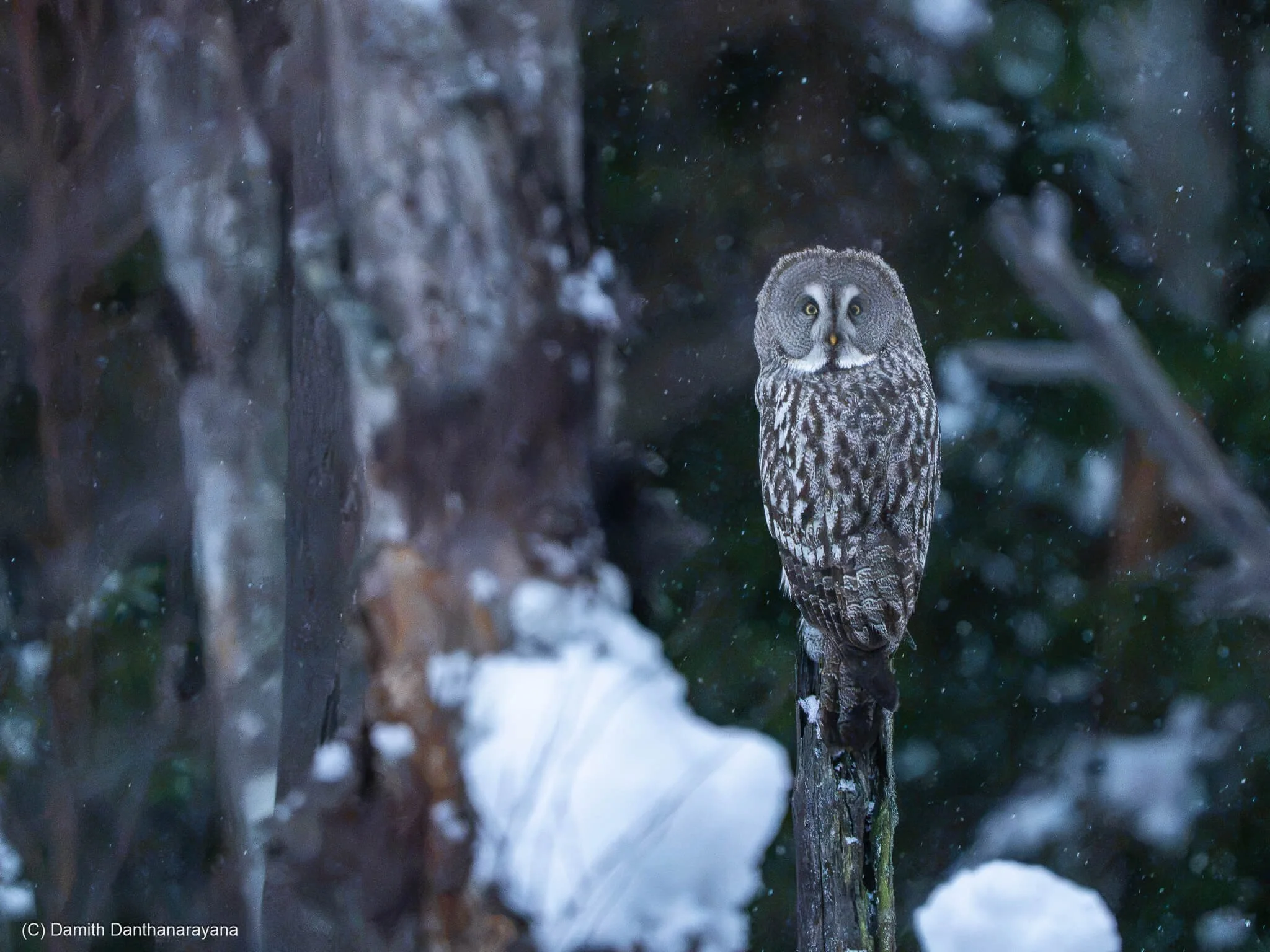
Great Grey Owl (Strix nebulosa) perched on a wooden stump in a snow-covered forest near Knivsta, Sweden, during a winter evening as light snowfall surrounds the bird.
📷 Sony A7 V + Sony FE 200-600mm F5.6-6.3 G OSS
(C) Damith Danthanarayana Photography
Living in Uppsala, Sweden, I spend a significant amount of my free time exploring forests around Uppsala, Knivsta, Stockholm, and other nearby areas in search of owls. It has become a reason to wake up before sunrise, travel to forests by bus, walk through snow-covered trails, and spend hours immersed in nature.
My favorite time for photography is usually within an hour after sunrise or during the final hour before sunset. During these periods, the light is softer, the forests are quieter, and wildlife is often more active. In particular, these times are ideal for photographing owls.
A few evenings ago, while exploring a forest area in Knivsta during the final minutes of daylight, I had no idea that one of my most memorable wildlife encounters was about to happen.
As I slowly scanned the surrounding forest, something caught my eye. At first, I could hardly believe it. Sitting quietly on a branch about twenty meters away from me was a Great Grey Owl (Strix nebulosa).
For a moment, time seemed to stop.
I had seen photographs of Great Grey Owls countless times. They are one of the bird species that every wildlife photographer dreams of encountering. However, seeing one in the wild, in its natural habitat, was a completely different experience.
My heart immediately started racing. I felt a mixture of excitement, surprise, and admiration. Against the snowy winter landscape, the owl looked absolutely magnificent. Despite my excitement, I knew I had to remain calm and avoid disturbing the bird. Moving slowly, I carefully raised my camera and took a few photographs. Then something incredible happened. The owl turned its head and looked directly at me.
Its enormous facial disc seemed to glow in the soft evening light, while its bright yellow eyes appeared to study me with curiosity. For several seconds, we simply looked at each other. It felt less like observing a bird and more like having a silent conversation with a wild creature that truly belonged to the forest. The owl remained relaxed and comfortable, giving me enough time to capture several images without causing any disturbance.
Even now, when I look at those photographs, I remember the feeling of standing there in the snowy forest, sharing the fading daylight with one of Sweden's most iconic birds. Eventually, the owl turned its attention back to the landscape, scanning the snow-covered ground for prey as darkness slowly settled over the forest.
It was a moment I will never forget.
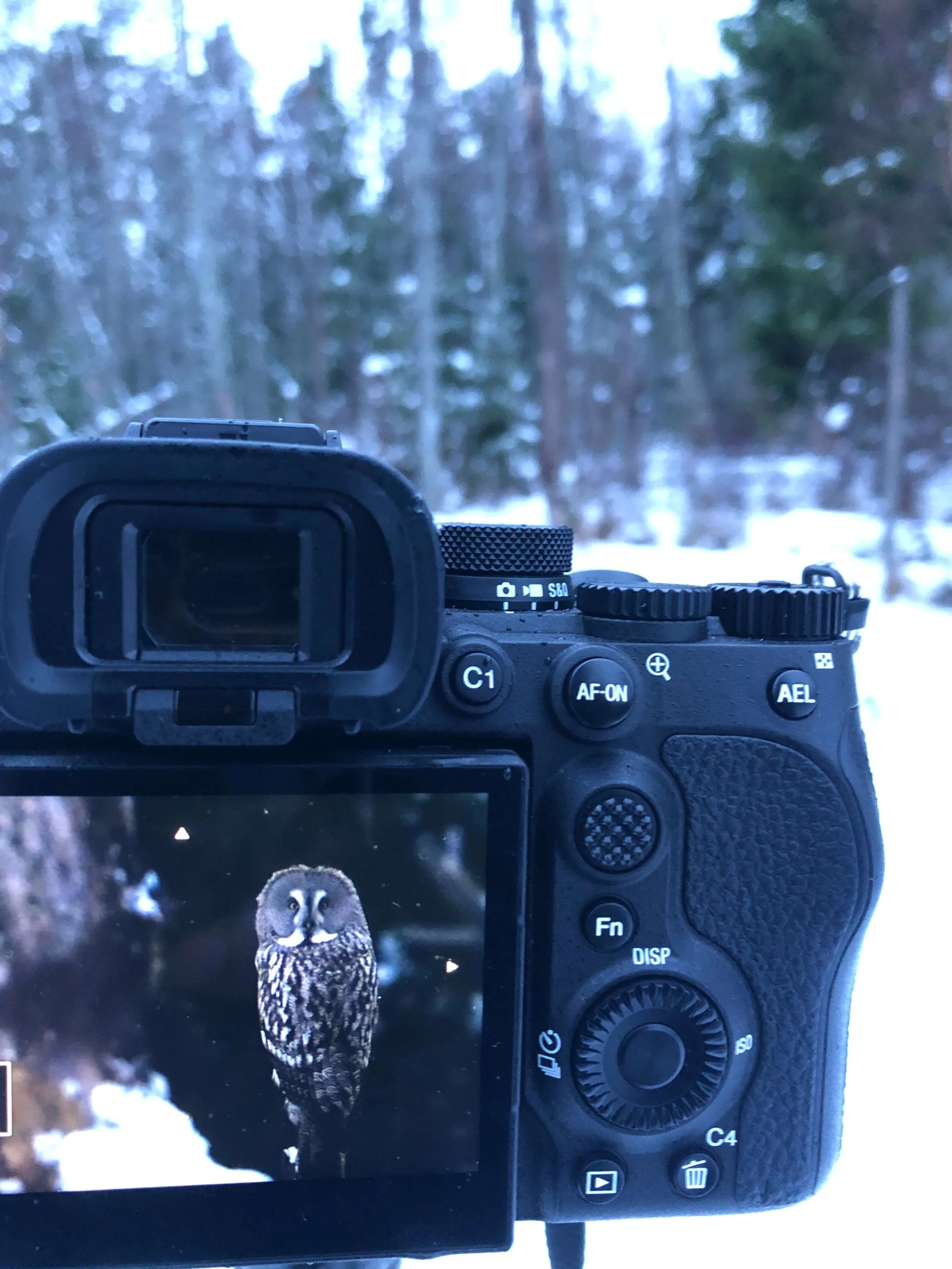
A Sony A7 V camera displays a recently captured image of a Great Grey Owl (Strix nebulosa) while standing in a snow-covered forest near Knivsta, Sweden. The scene reflects the reward of spending several hours in cold winter conditions searching for owls and photographing wildlife in their natural habitat.
(C) Damith Danthanarayana Photography
Why Is It Called the "Ghost of the Nordic Forests"?
Few birds have a nickname as fitting as this one. The Great Grey Owl seems almost supernatural when encountered in the wild. Its grey plumage blends perfectly with tree trunks, rocks, and snowy landscapes. It flies almost silently and often appears without warning.
One moment the forest seems empty. The next moment, a giant owl is perched quietly among the trees. Because of its silent nature and ghost-like appearance, birdwatchers and photographers across Scandinavia often refer to it as the “Ghost of the Nordic Forests” or “phantom of the north”.
The Great Grey Owls are Extraordinary Hunters
What truly makes the Great Grey Owl remarkable is not its size but its hearing. Its giant facial disc acts like a satellite dish, collecting even the faintest sounds. During winter, when rodents move below the snow, the owl can hear them from surprising distances.
Researchers have documented Great Grey Owls locating prey beneath more than 30 centimeters of snow. The hunting strategy is simple but astonishing:
The owl waits patiently on a perch.
It listens.
It focuses.
Then suddenly it launches into the air and dives straight into the snow.
Seconds later, it emerges carrying a vole.
This incredible ability allows the owl to survive even during harsh Nordic winters.
Where Can You Find Great Grey Owls?
The Great Grey Owl can be found across the northern forests of:
Sweden
Norway
Finland
Russia
Canada
Alaska
Northern United States
Parts of Mongolia
Its preferred habitat is the boreal forest, often close to open meadows, bogs, or clearings where hunting opportunities are good.
Sweden is one of Europe's best countries for observing Great Grey Owls. In Sweden, they are most commonly found in:
Norrbotten
Västerbotten
Jämtland
Härjedalen
Northern Dalarna
However, some birds move south during certain years, especially when food availability changes. This is one reason photographers in central Sweden occasionally get lucky.
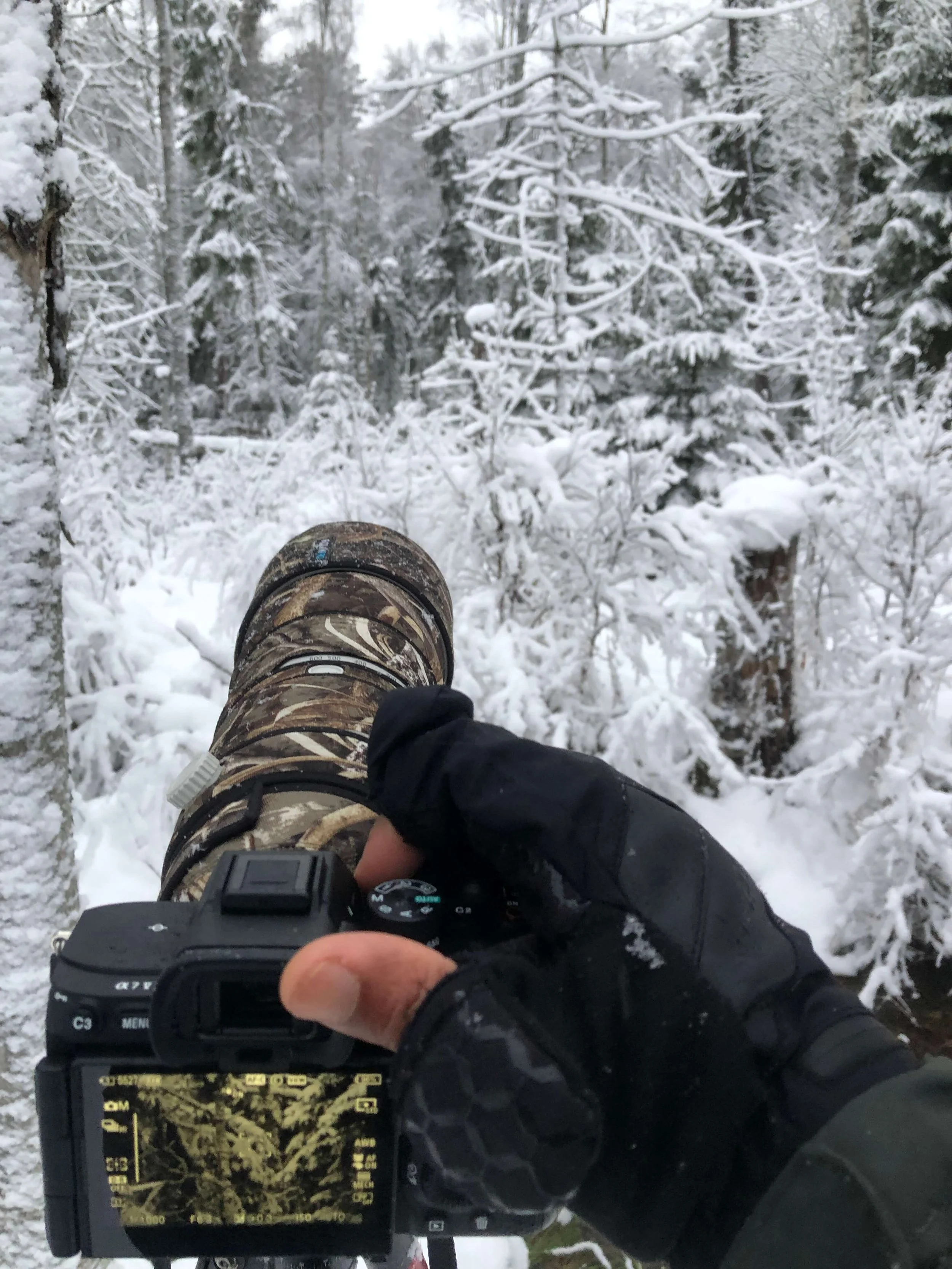
Searching for Great Grey Owls in a Snowy Swedish Forest.
For this wildlife photography outing, I used a Sony A7 V paired with the Sony FE 200-600mm F5.6-6.3 G OSS lens.
I used the Vallerret Markhof Pro V4 Photography Gloves. One feature I particularly appreciate is the fold-back design on the index finger and thumb, which allows me to quickly expose my fingertips when adjusting camera settings.
As darkness began covering the forest, I slowly packed my camera and continued my walk back through the snow. The Great Grey Owl remained behind, watching over its winter kingdom.
Encounters like this are why I continue exploring forests around Uppsala, Knivsta, Stockholm, and other parts of Sweden, even during the coldest months of the year. You can spend dozens of winter mornings and evenings without seeing anything unusual. Then one day, nature surprises you with a moment that makes every difficult walk worthwhile. For me, that moment was standing twenty meters away from a Great Grey Owl as the last light of a Swedish winter day faded through the trees. For a few minutes, I was face to face with the true Ghost of the Nordic Forests.
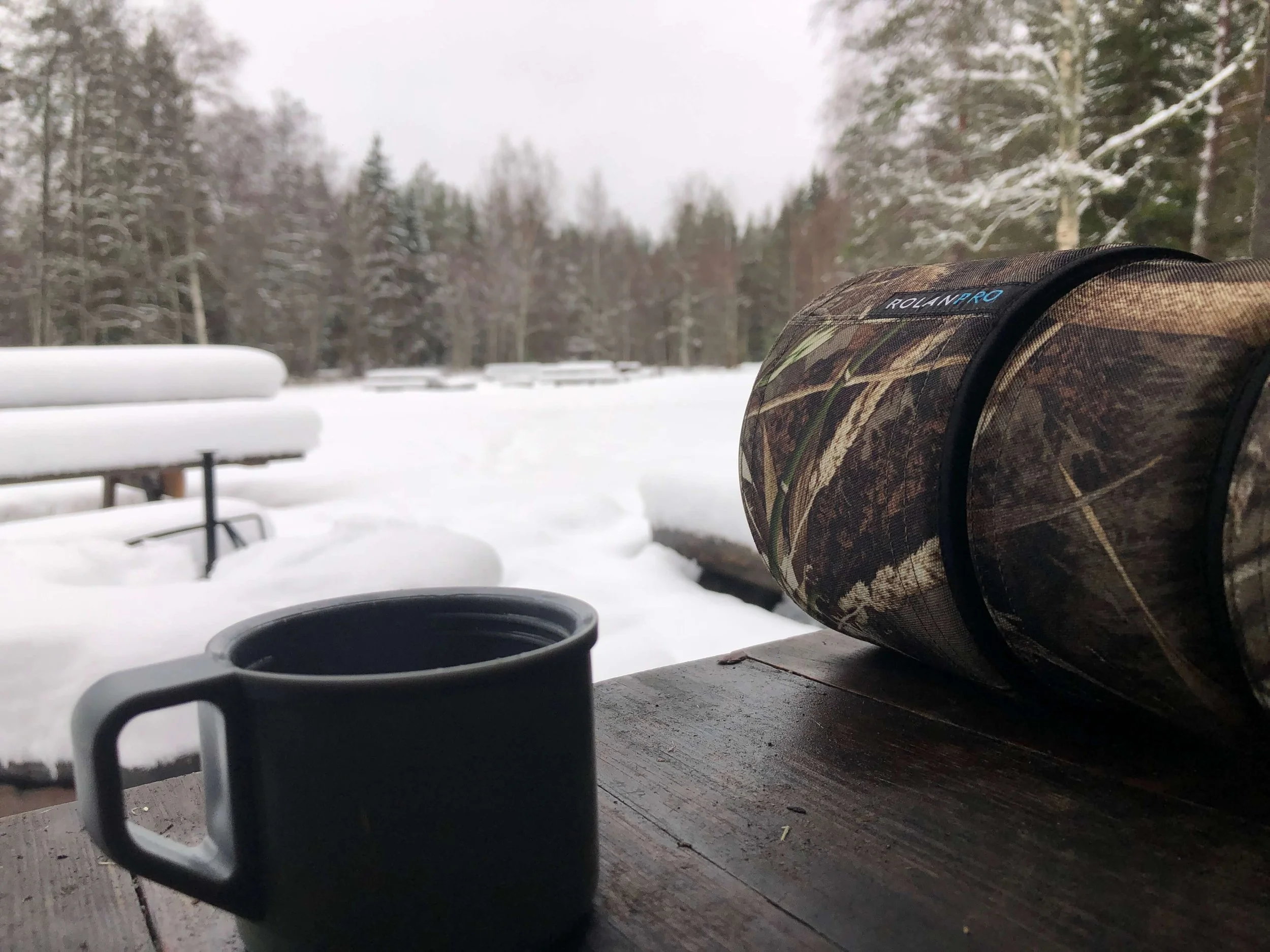
Winter owl photography is not only about the photographs. It is also about the long hours spent outdoors, waiting, observing, and enjoying the quiet beauty of Sweden's snow-covered forests. A hot cup of coffee often becomes an essential companion during these cold adventures.
Search the blog:





A Winter Search for the Great Grey Owl in Sweden
Hours of Patience in the Winter Forest
Join me on a winter wildlife photography adventure near Uppsala and Knivsta, Sweden, where hours spent walking through snow-covered forests eventually led to an unforgettable Great Grey Owl encounter.