On a crisp autumn morning near the SLU campus in Ultuna, a flock of birds landed in a rowan tree heavy with bright red berries. Their soft colours, elegant crests, and constant chatter immediately caught my attention. These were Bohemian Waxwings (Bombycilla garrulus), one of Scandinavia's most distinctive winter visitors.
For birdwatchers and photographers, the arrival of waxwings often signals that winter is approaching. Their unpredictable movements, striking appearance, and social behaviour make them one of the most sought-after birds during the colder months.
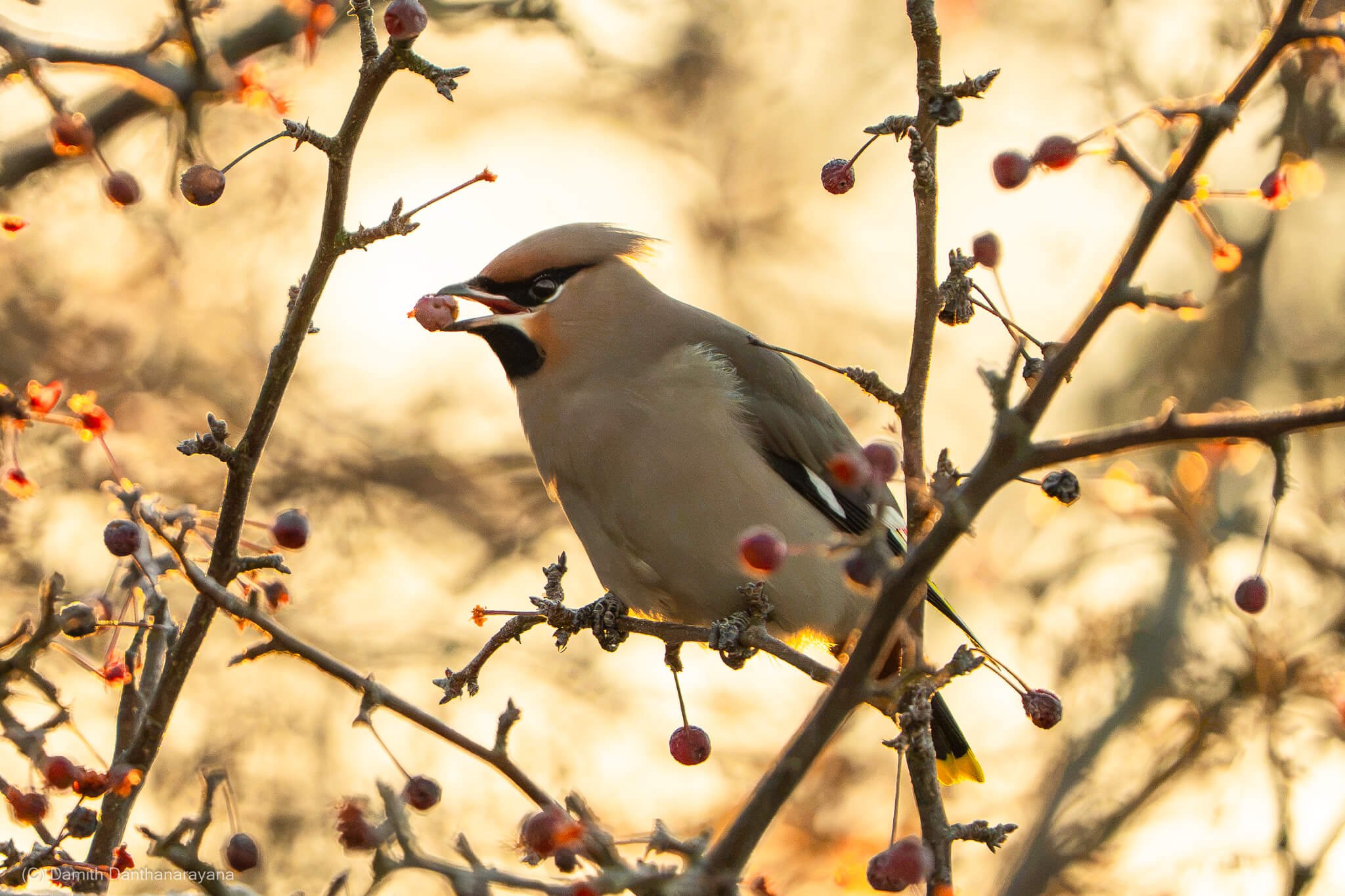
Bohemian Waxwing (Bombycilla garrulus) feeding on frozen berries during a golden winter sunrise near Ultuna, Uppsala, Sweden. The warm backlight highlights the bird's silky plumage and distinctive crest as it forages among frost-covered branches.
📷 Sony A7 V + Sony FE 200-600mm F5.6-6.3 G OSS
(C) Damith Danthanarayana Photography
A Unique Appearance
The Bohemian Waxwing is instantly recognisable. Its silky plumage blends shades of grey, beige, chestnut, and black. The bird's most distinctive feature is its swept-back crest, giving it an almost punk-rock appearance.
Closer inspection reveals even more remarkable details. The wings display bright yellow and white markings, while small red tips on the secondary feathers resemble drops of sealing wax. These "wax seals" inspired the bird's English name, Waxwing.
Adults measure around 18 to 23 centimetres in length and are slightly larger than starlings. Males and females look very similar, making identification challenging even for experienced birders.
Winter Nomads
Unlike many birds that migrate to warmer regions, Bohemian Waxwings practice a different strategy. They breed across the vast boreal forests of northern Scandinavia, Russia, and other northern regions of Eurasia.
During autumn and winter, they move southward in search of food. Their movements are highly irregular and depend largely on berry crops. In years when northern berry supplies are poor, large flocks may appear much farther south than usual. These events are known as "irruptions" and can bring thousands of waxwings into Swedish towns and cities.
Uppsala often becomes an important stopover because of its abundance of rowan, cotoneaster, and ornamental berry-bearing trees.
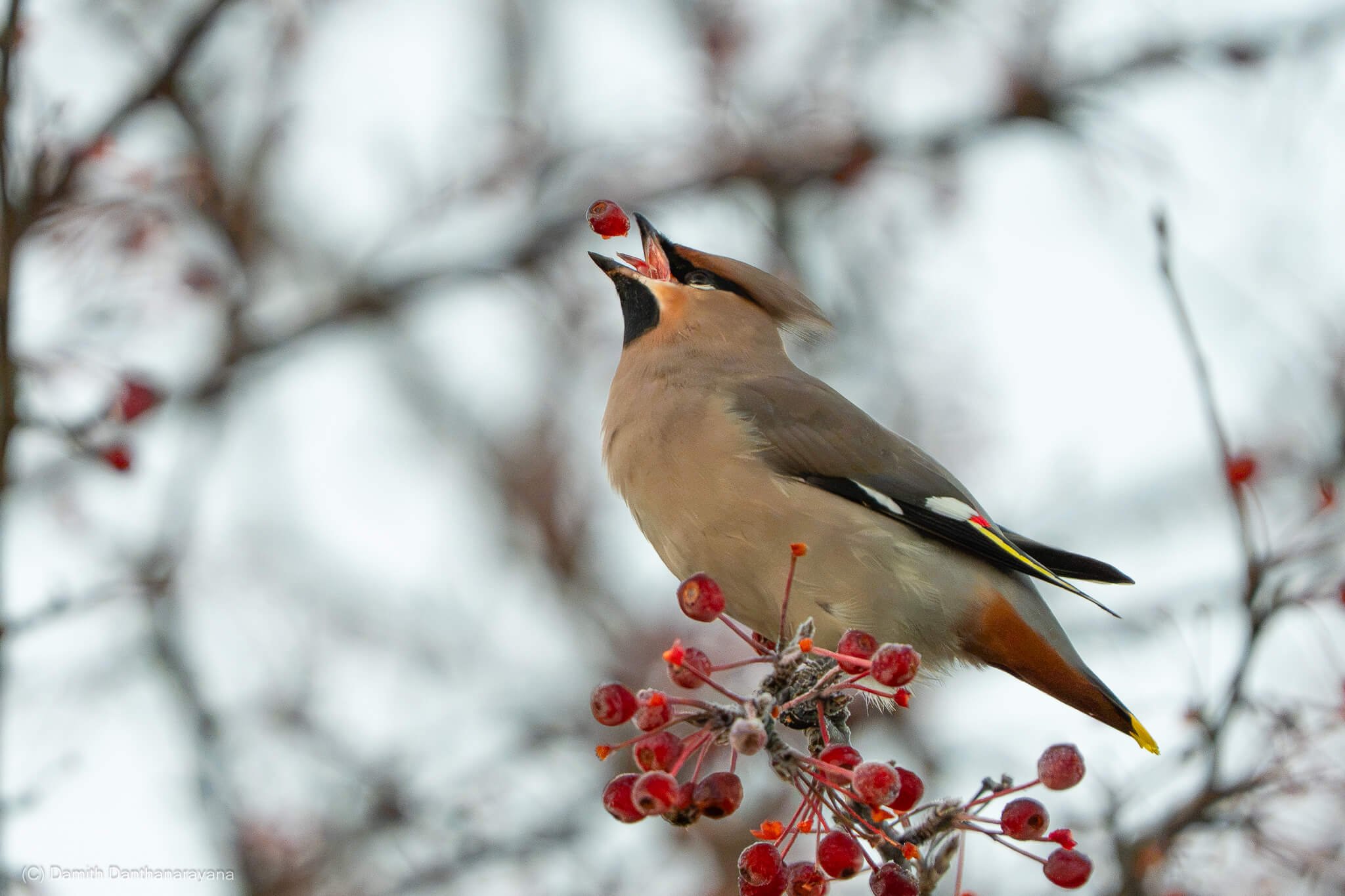
Bohemian Waxwing perched on a berry-covered branch, tossing and catching a red berry in mid-air during winter in Uppsala, Sweden.
📷 Sony A7 V + Sony FE 200-600mm F5.6-6.3 G OSS
(C) Damith Danthanarayana Photography
Life Around the Berry Trees
The flock I observed at Ultuna appeared completely focused on feeding. Waxwings are specialists when it comes to berries. Rowan berries are among their favourites, although they also consume berries from hawthorn, juniper, and various ornamental shrubs.
What makes waxwings fascinating is their social nature. They rarely travel alone. Instead, they move in tightly connected flocks, communicating constantly through high, trilling calls. When a productive berry tree is found, dozens of birds may descend simultaneously, creating a spectacular display of movement and sound.
This social behaviour also provides endless opportunities for photography. Birds frequently reposition themselves, interact with one another, and launch into synchronized flights between feeding locations.
Photography Opportunities in Ultuna
The SLU campus at Ultuna offers excellent opportunities to photograph waxwings. Berry-rich trees near pathways, academic buildings, and open green areas often attract feeding flocks during autumn and winter.
Photographing waxwings presents several advantages:
They are often more approachable than many woodland species.
Bright berries add natural colour and context to images.
Flocks provide opportunities for behavioural photography.
Their elegant crest and colourful wing markings create striking portraits.
However, patience remains essential. Although waxwings may appear relaxed while feeding, the entire flock can suddenly take flight with little warning.
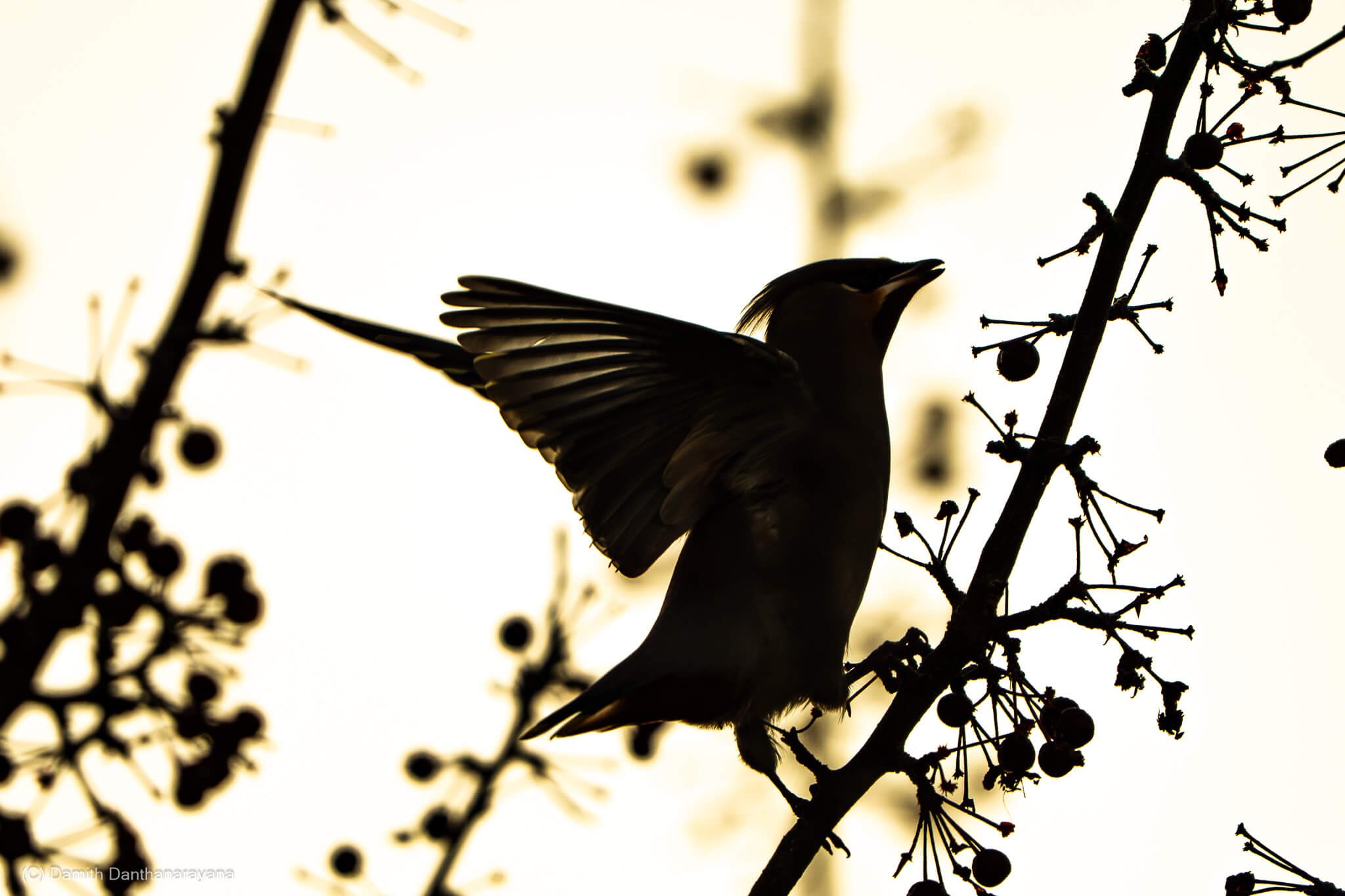
A silhouetted Bohemian Waxwing (Bombycilla garrulus) spreads its wings among berry-laden branches, backlit by the soft glow of a winter sunrise in Uppsala, Sweden.
📷 Sony A7 V + Sony FE 200-600mm F5.6-6.3 G OSS
(C) Damith Danthanarayana Photography
An Important Ecological Role
Waxwings play a valuable role in northern ecosystems by dispersing seeds of berry-producing plants. As they travel across large distances, seeds pass through their digestive systems and are deposited in new locations.
Their movements also reflect changes in food availability, making them useful indicators of seasonal ecological conditions across northern Europe.
Why People Love Waxwings
Many birds possess bright colours, and many travel in flocks. Yet waxwings combine beauty, unpredictability, and personality in a way few species can match.
For residents of Uppsala, their arrival adds colour and excitement to otherwise grey winter days. For photographers, every flock offers new opportunities. And for birdwatchers, their cheerful calls often provide the first clue that a group has arrived nearby.
Watching them feed among the berry trees of Ultuna reminds us that even during Sweden's darkest months, nature continues to offer moments of remarkable beauty.
The Bohemian Waxwing remains one of the most elegant ambassadors of the northern winter, and encountering a flock in Ultuna is an experience that few nature enthusiasts quickly forget.
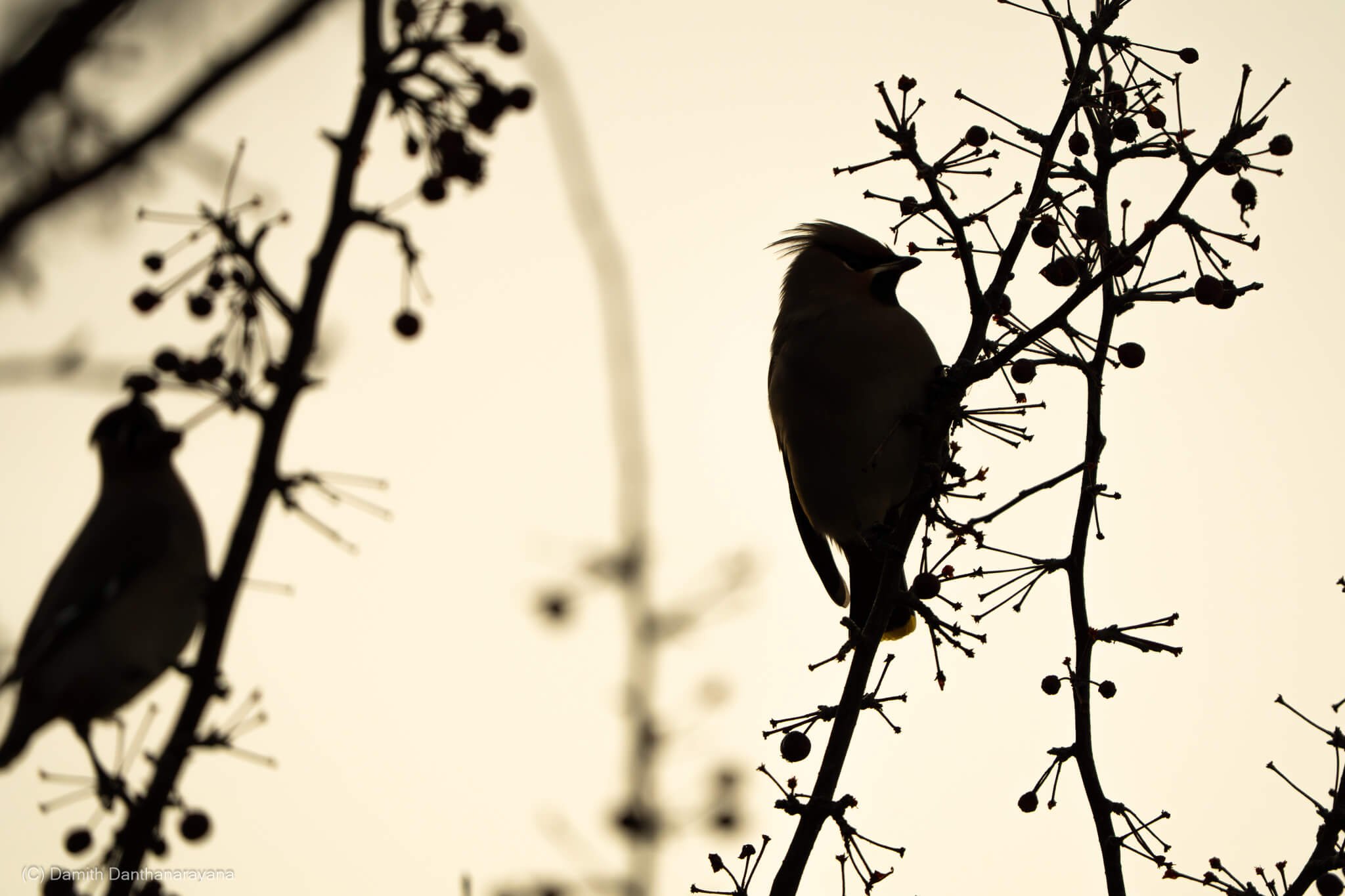
Two Bohemian Waxwings (Bombycilla garrulus) perch among berry-covered branches, their elegant silhouettes illuminated by the soft glow of a winter sunrise in Uppsala, Sweden.
📷 Sony A7 V + Sony FE 200-600mm F5.6-6.3 G OSS
(C) Damith Danthanarayana Photography
Search the blog: